pos-system-with-barcode-scanner

POS with Barcode Scanner: The Complete Buying Guide for Retail Owners

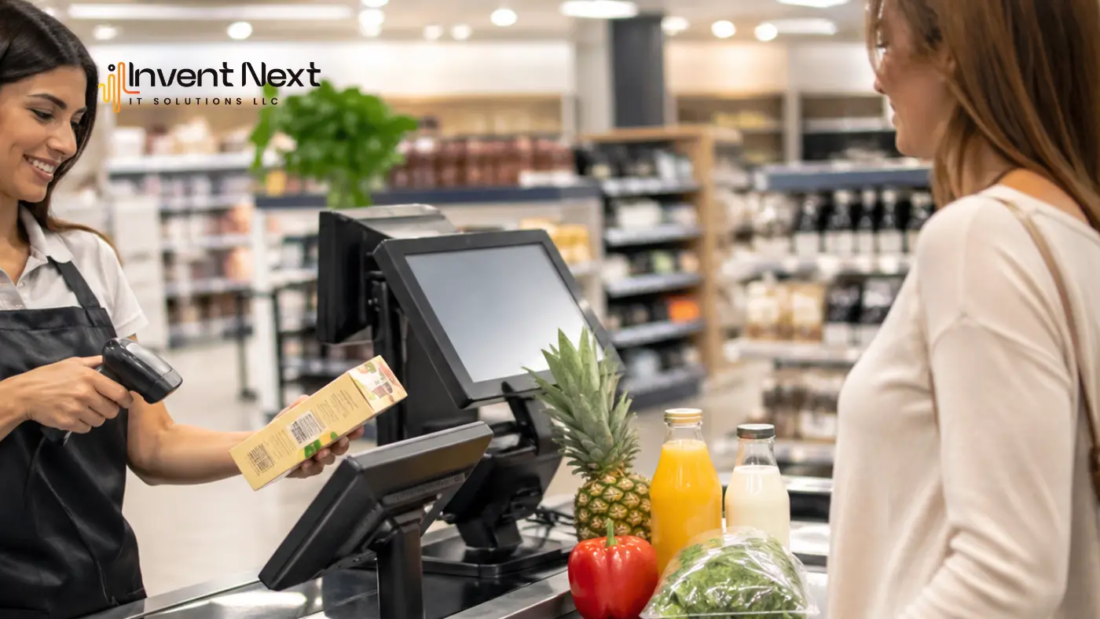
Speed defines modern retail. Customers don’t want to wait, and businesses can’t afford billing errors or stock confusion. If your checkout process still depends on manual entry, you’re already a step behind. A POS with barcode scanner changes that—not just at the till, but across your entire operation. This guide walks you through everything you need to know before making that investment.

What a POS with Barcode Scanner Actually Does

Most people think of a barcode scanner as a checkout tool. But when a barcode is scanned, your POS system isn’t just reading a price; it’s updating inventory, recording the transaction, and feeding your sales data. All of this happens automatically, in under a second.

Here’s what that looks like in practice:

  • Every sale reduces your stock count in real time; no manual stocktakes needed
  • Pricing is pulled directly from your database, eliminating cashier errors
  • Sales reports build themselves throughout the day
  • Slow-moving items become visible before they become a cash flow problem

For larger operations managing stock across storage facilities, connecting your POS with a warehouse management system Dubai providers offer adds another layer—syncing shelf stock with back-store inventory and flagging reorder needs automatically.

What to Look for Before You Buy

Choosing the right system isn’t about finding the most feature-rich option. It’s about finding one that fits how your store actually operates.

Ease of Use Comes First

A POS system is only as good as the people using it. Run the demo with someone from your actual floor team. If a new staff member can process a transaction correctly after 15 minutes of guidance, that’s a good sign.

Transaction Speed Matters More Than You Think

A two-second delay per scan sounds minor. During a Saturday afternoon rush with 30 customers in line, it’s the difference between smooth operations and a frustrated queue. Your system should process each scan in under 200 milliseconds. Test this during the demo — not after signing the contract.

Inventory Management Should Be Built In

Automatic stock updates after every sale are non-negotiable. But good inventory management goes further: low-stock alerts, variant tracking, and the ability to pull a stock report without stopping operations.

Businesses in the UAE should also ensure their chosen point of sale software UAE aligns with local compliance requirements — including VAT calculation, Arabic language support, and regional accounting standards. These aren’t optional features here; they’re baseline expectations.

Hardware Compatibility Shouldn’t Be an Afterthought

Your scanner, receipt printer, payment terminal, and cash drawer all need to work together without custom workarounds. Ask vendors which hardware is supported, which is recommended, and what happens when a peripheral needs replacing.

Benefits Beyond the Checkout Counter

A well-implemented POS with barcode scanner reshapes how you run your entire business.

  • Faster checkout, better customer flow. Peak hours stop being a bottleneck when transactions are processed in seconds.
  • No more pricing errors. Every price is drawn from a central database. Promotions apply automatically.
  • Actionable sales data. Which products perform best? What are your peak hours? Your system answers these questions daily without you having to ask.
  • Scalable operations. For businesses planning expansion, retail software Abu Dhabi with centralized dashboards makes managing multiple locations significantly more straightforward.

Common Mistakes to Avoid

  • Prioritising price over fit. A low-cost system that lacks scalability will cost more in workarounds over time. Think in three-year total cost, not day-one price.
  • Ignoring offline capability. Internet connections fail. Confirm that your system processes sales locally during outages and syncs when connectivity returns.
  • Skipping proper training. Budget time for structured staff onboarding before go-live—not a rushed walkthrough on the first day.
  • Not testing integrations. If your POS connects to accounting software or supplier portals, test those connections before launch, not after.

How It Sharpens Business Decisions

The best retail decisions are made with data. A modern POS generates daily revenue breakdowns, product-level performance, return rates, and peak hour patterns automatically, as your store operates.

For financial oversight, connecting your POS with billing software Abu Dhabi solutions ensures sales records feed directly into your accounting workflow, reducing manual reconciliation and improving reporting accuracy.

Expert Tips Before You Commit

  • Request a 30-day pilot before full deployment — reputable vendors will accommodate this
  • Clean your product catalog before migration; duplicate entries cause downstream problems
  • Insist on local support, not just an email ticket system—response time matters when checkout fails at peak hour
  • Verify VAT compliance is native to the system, not dependent on a third-party plugin

Frequently Asked Questions

Is a barcode scanner essential or optional?

Optional in theory — essential in practice for any store managing more than a handful of products. Manual entry at scale is slow, error-prone, and unsustainable.

Can small stores benefit from this?

Absolutely. Small stores often see the most dramatic improvement precisely because the jump from manual to automated is so significant.

How disruptive is the setup?

A single-store setup can go live within a few days. Multi-location rollouts typically take two to four weeks with proper planning.

What if a product doesn’t have a barcode?

Most POS platforms let you assign custom PLU codes and print labels using a basic label printer common in food retail and handmade product categories.

Final Thought

A POS with barcode scanner is the operational foundation your store runs on every transaction, every stock count, every business decision. Get it right and the benefits compound over time. Get it wrong, and you spend years working around a system that was never built for how you actually operate. Take the time to evaluate properly, involve your team, and choose a vendor who stays responsive long after the sale.

Ready to streamline your retail operations? Get started with Invent Next’s advanced POS with barcode solutions and experience faster billing, smarter inventory, and complete business control. Call +971 552088101 today to speak with our experts and find the right POS solution for your business.

pos-system-for-convenience-store-in-dubai

POS System for Convenience Store: Why Modern Stores Can’t Run Efficiently Without It

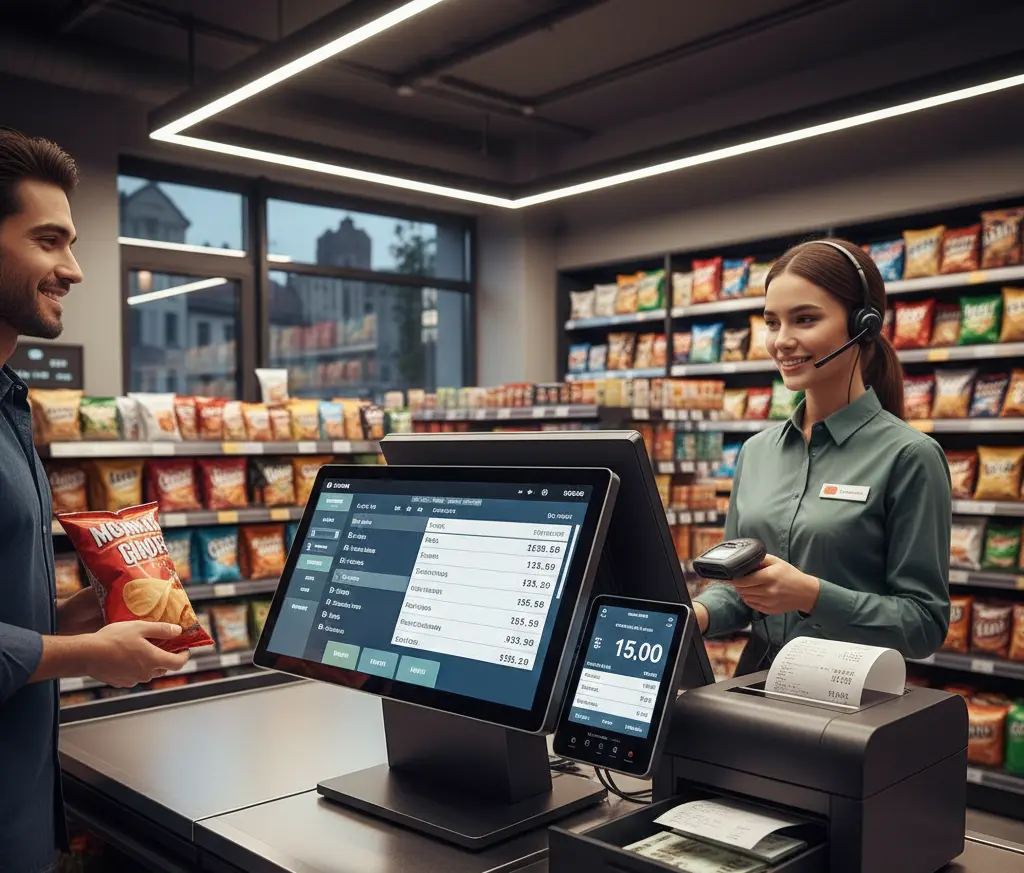
It’s 9 PM, and your convenience store is at its busiest. Customers are walking in after work, grabbing snacks, drinks, and daily essentials. One customer reaches the counter, ready to pay quickly and leave. But the billing takes longer than expected. Your cashier searches for prices, enters details manually, and double-checks totals. The queue gets longer. One customer leaves without buying anything. Another looks frustrated. This is not just a billing delay—it’s a lost opportunity. Many convenience store owners face this situation daily without realizing how much it affects their business. Slow billing, stock confusion, and a lack of clear sales tracking create small problems that grow over time. This is exactly where the right pos system for convenience store operations makes a real difference. It simplifies billing, tracks inventory automatically, and gives store owners complete visibility into their business.

In fast-moving retail environments like the UAE, using modern POS technology is no longer optional. It’s a key part of running an efficient and profitable convenience store.

Why Traditional Billing Methods Hold Stores Back

Convenience stores operate differently from supermarkets. Customers visit these stores expecting quick service. They want to enter, buy what they need, and leave within minutes. When billing is done manually, it slows everything down. Staff need to enter product prices, calculate totals, and manage records separately. This not only takes time but also increases the chances of mistakes. Manual systems also make it difficult to track inventory. Store owners often don’t realize when stock is running low until it’s too late. This leads to missed sales and unhappy customers. Many retailers who adopted Retail software Abu Dhabi solutions noticed immediate improvements in billing speed and inventory accuracy.

What a POS System Actually Does

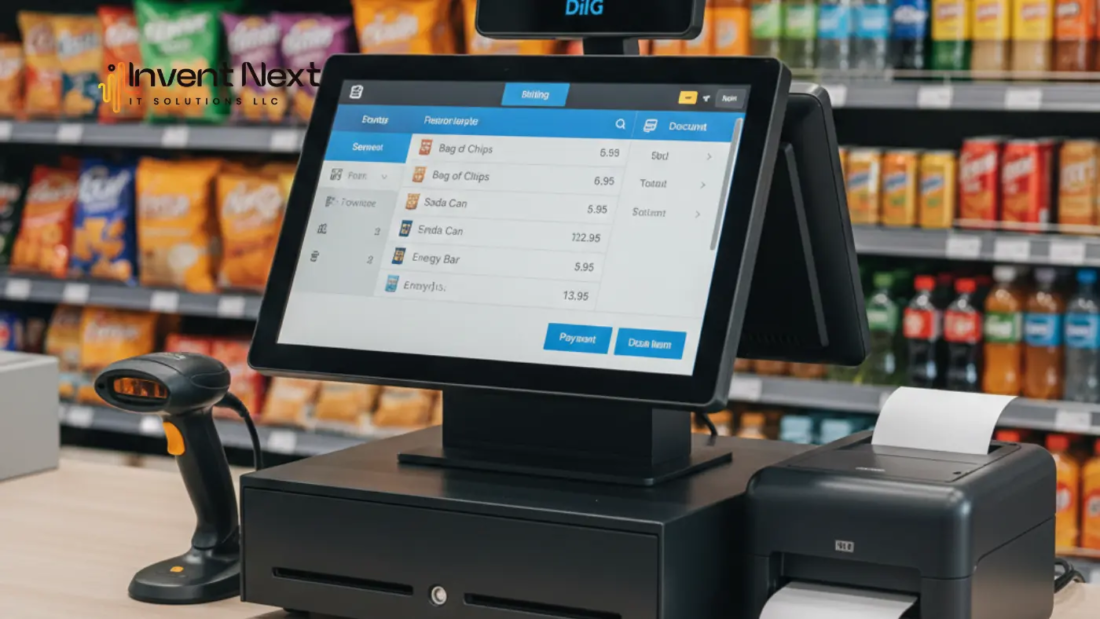
A POS system replaces manual billing and record-keeping with an organized digital solution. It handles billing, inventory, and sales tracking in one place. When a product barcode is scanned, the system instantly shows the price, adds it to the bill, and updates inventory automatically. The entire process takes seconds. This reduces staff workload and makes daily operations smoother. It also ensures that every transaction is recorded accurately. Retailers using Billing software Abu Dhabi platforms often find it easier to manage their stores and track performance.

Key Benefits of Using a POS System in a Convenience Store

A POS system improves multiple areas of store operations. The benefits go beyond just billing.

Faster billing and reduced waiting time
Customers can complete purchases quickly, which improves their experience and encourages repeat visits.

Accurate inventory tracking
Every product sold is automatically updated in the system, helping you avoid stock shortages.

Clear visibility into sales performance
Store owners can see daily sales, best-selling products, and overall business performance.

Reduced billing errors
Automated calculations eliminate manual mistakes.

Better control over business operations
All important store data is available in one place.

These improvements help store owners operate more efficiently and confidently.

Real-World Example: How a POS System Changes Daily Operations

A convenience store owner in a residential area struggled with slow billing and poor inventory management. During peak hours, customers had to wait longer, and some products ran out without notice. After installing a POS system, billing became faster, and inventory tracking improved. The store owner could see which products sold the most and restock them on time. Within a few months, store operations became smoother, and customer satisfaction improved significantly. This kind of transformation is common for retailers using Retail software Dubai solutions.

How POS Systems Help Store Owners Make Better Decisions

One of the biggest advantages of using a POS system is access to real-time information. Store owners no longer have to rely on guesswork.

You can easily identify:

  • Which products sell the most
  • Which items are not performing well
  • What time is your store busiest
  • How much revenue does your store generate daily

This information helps you make smarter decisions about stock and sales strategy. Many businesses using Retail pos system uae platforms rely on these insights to improve efficiency and profitability.

Important Features to Look for in a Convenience Store POS System

Choosing the right POS system is important for long-term success. The system should support your store’s daily needs without being complicated.

Look for features such as:

  • Fast and simple billing interface
  • Automatic inventory tracking
  • Barcode scanner compatibility
  • Sales reporting and analytics
  • Support for multiple payment methods

Retailers using the Retail Pos system Dubai often prefer systems that are easy to use and reliable.

Common Mistakes Store Owners Should Avoid

Some store owners choose POS systems without considering their long-term needs. This can create problems later. One common mistake is choosing a system only because it is cheap. Low-cost systems may lack important features or reliability. Another mistake is choosing software that is difficult to use. Staff should be able to learn and use the system quickly without confusion. It’s also important to choose a system that can support your business as it grows. The right pos system for convenience store environments should make operations easier, not more complicated.

How POS Systems Support Business Growth

As your store becomes busier, managing everything manually becomes harder. A POS system helps you stay organized and efficient, even as customer traffic increases. You can handle more transactions, manage inventory more effectively, and maintain better control over your business. This allows store owners to focus on improving customer service and expanding their business instead of worrying about operational challenges.

Frequently Asked Questions

Is a POS system necessary for small convenience stores?
Yes. Even small stores benefit from faster billing, better inventory tracking, and improved efficiency.

Will a POS system reduce billing mistakes?
Yes. Automated billing removes calculation errors and improves accuracy.

Is it difficult for staff to use a POS system?
No. Most POS systems are designed to be simple and easy to learn.

Can a POS system help increase profits?
Yes. By improving efficiency and reducing losses, POS systems help increase overall business performance.

Conclusion

Running a convenience store requires speed, accuracy, and good organization. Manual billing and inventory tracking create unnecessary challenges that slow down operations and affect customer experience. A modern pos system for convenience store operations simplifies billing, improves inventory management, and gives store owners clear insights into their business. It helps reduce errors, improve efficiency, and create a smoother experience for both staff and customers. In today’s competitive retail environment, investing in the right POS system is one of the smartest decisions a convenience store owner can make. It not only improves daily operations but also supports long-term business growth and success.

If you’re looking for the best POS software, Invent Next offers complete business solutions, including restaurant POS software, retail POS systems, POS systems for supermarkets, garage software, and warehouse management software.

Call +971 552088101 today to speak with our experts and find the right POS solution for your business.

retail-pos-software-in-dubai-abudhabi-uae

Common Problems Faced by Retailers Without POS Software in Dubai

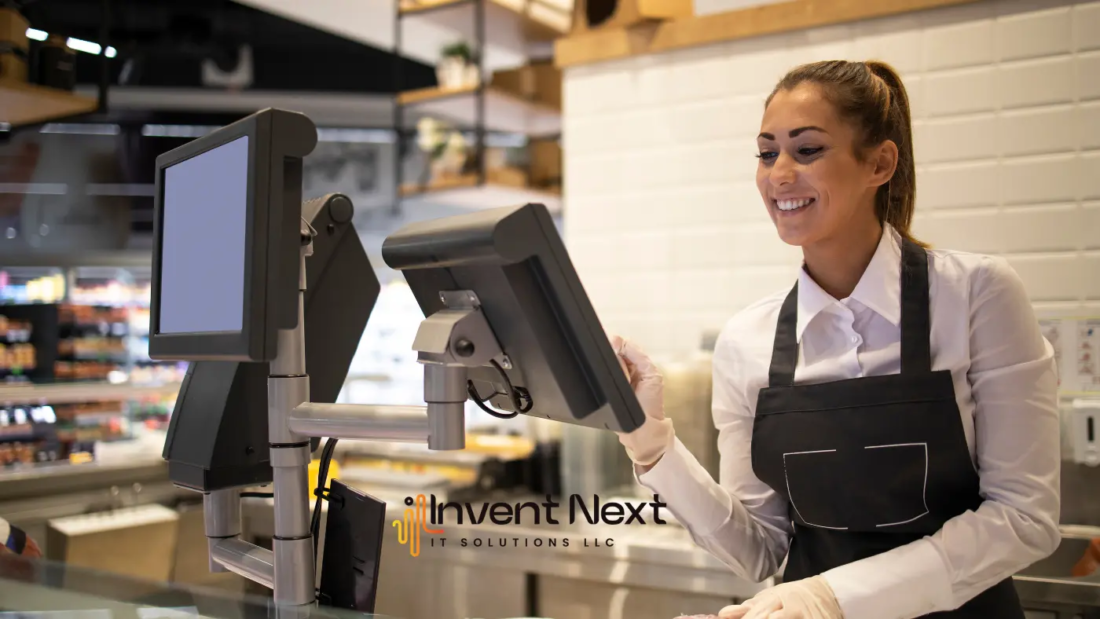
Running a retail business in Dubai is highly competitive, and customer expectations continue to rise. Shoppers demand fast billing, accurate pricing, and product availability, while retailers must handle inventory, staff, and reporting efficiently. However, many businesses still operate without retail software in Dubai, relying instead on manual systems or basic billing tools. As a result, daily operations often become slow, error-prone, and difficult to scale. Understanding common problems faced without retail POS clearly shows why POS software has become a necessity rather than a luxury for modern retailers.

Billing Delays and Long Checkout Queues

One of the most noticeable problems retailers face without POS software is slow billing. Manual price entry and outdated billing methods increase checkout time. During peak hours, this leads to long queues and frustrated customers. Consequently, some shoppers abandon their purchases.

In a fast-paced retail environment, speed matters. Therefore, retailers without a reliable Retail POS often struggle to meet customer expectations and maintain a positive brand image.

Frequent Billing and Pricing Errors

Manual billing systems increase the chances of incorrect pricing, missed items, and calculation mistakes. Over time, these small errors accumulate and cause revenue loss. Moreover, repeated billing issues can weaken customer trust and damage business credibility.

POS software minimizes these risks by automating pricing, discounts, and tax calculations. As a result, retailers can ensure consistency and transparency across every transaction.

Poor Inventory Control

Another major challenge is inventory management. Without automation, retailers usually update stock levels only at the end of the day. Because of this, staff lack visibility into real-time product availability.

This situation leads to overstocking of slow-moving items or running out of fast-selling products. In competitive retail markets, poor inventory control directly affects sales and increases operating costs.

Lack of Real-Time Business Insights

Retailers operating without POS software often lack clear, data-driven insights. Sales trends, peak hours, and customer buying behavior remain difficult to track when records are scattered or manual. As a result, decision-making becomes reactive rather than strategic.

Access to centralized reporting helps retailers understand performance more clearly. Therefore, data visibility plays a vital role in long-term business planning.

Difficulty Managing Staff and Daily Operations

As a retail business grows, managing staff manually becomes increasingly complex. Tracking shifts, monitoring performance, and ensuring accountability require significant effort. Without digital tools, productivity often suffers.

A structured POS system simplifies these tasks by recording transactions by user. In addition, it helps business owners manage operations with greater control and clarity.

Inefficient Handling of Discounts and Promotions

Retail promotions are common in Dubai, especially during seasonal sales and shopping festivals. However, without POS software, staff often apply discounts manually. This approach can lead to inconsistencies, confusion at checkout, and revenue leakage.

POS systems allow retailers to predefine offers and promotions. As a result, discounts apply accurately across all transactions, ensuring consistency and customer confidence.

Challenges in VAT Compliance and Reporting

VAT compliance is mandatory for businesses in the UAE. Retailers using manual systems often struggle to maintain accurate tax records. Because manual reporting takes time, errors can occur during filings or audits.

Modern POS systems simplify VAT calculations and reporting. Therefore, retailers can remain compliant while reducing administrative effort and risk.

Limited Scalability for Business Growth

Manual systems may support small operations initially. However, they quickly become a limitation as the business expands. Managing higher sales volumes, larger inventories, or multiple branches becomes difficult without centralized control.

A scalable Retail POS system in the UAE supports business growth by maintaining accuracy and efficiency across operations. As a result, retailers can expand without compromising service quality.

Reduced Customer Experience and Loyalty

Ultimately, operational inefficiencies affect the customer experience. Billing delays, stock shortages, and inconsistent pricing reduce satisfaction. In a city like Dubai, where customers have many options, poor service can easily drive them to competitors.

By streamlining operations, POS software enables faster service and better stock availability. Consequently, retailers can build stronger customer trust and long-term loyalty.

Conclusion

Retailers in Dubai who operate without POS software face challenges that limit efficiency, accuracy, and growth. From billing delays and inventory issues to compliance risks and limited visibility, manual systems often hold businesses back. Therefore, adopting a modern POS solution is essential for retailers aiming to remain competitive.

By improving daily operations and supporting smarter decision-making, POS software helps retailers deliver better customer experiences and achieve sustainable success in Dubai’s evolving retail landscape.

pos-software-in-uae

Retail POS System: Transforming Retail and Supermarket Operations

Retail and supermarket businesses in Dubai operate in a highly competitive and fast-paced market. Customers expect quick checkouts, accurate pricing, and consistent product availability. Managing billing, inventory, and customer data manually often leads to errors, delays, and revenue loss. This is why many businesses are now adopting a retail POS system Dubai to streamline operations and improve overall efficiency.

Modern POS solutions go beyond billing. They act as complete business management tools that help retailers and supermarkets stay organized, scalable, and customer-focused.

Why Retail Businesses in Dubai Need a Retail POS System

Retail stores handle multiple daily tasks such as sales processing, stock updates, promotions, and reporting. With real-time sales tracking and automated inventory updates, retailers gain full control over their operations. Pricing errors are reduced, billing becomes faster, and staff productivity improves. Retail software also helps store owners monitor performance and make informed business decisions based on accurate data.

POS for Supermarket : Managing High-Volume Sales Efficiently

Supermarkets face unique challenges due to high customer footfall and large product volumes. Manual processes slow down checkout and increase the risk of inventory mismatches. This is where POS software for supermarket UAE becomes essential.

Supermarket POS systems support barcode scanning, weighing scale integration, and fast billing. Each transaction updates inventory instantly, ensuring accurate stock levels at all times. This allows supermarkets to manage fast-moving and slow-moving items efficiently while maintaining smooth customer flow at billing counters.

Accurate Inventory Control

Inventory accuracy directly impacts supermarket profitability. Provides real-time visibility into stock movement, expiry dates, batch numbers, and supplier details.

Automated low-stock alerts help managers reorder products on time, preventing shortages or excess inventory. Detailed reports highlight best-selling products and inventory aging, enabling smarter purchasing decisions and reduced wastage.

How Retail Software in Dubai Improves Customer Experience

Customer experience is a key differentiator in retail. Long queues, incorrect pricing, or payment issues can quickly lead to dissatisfaction. A modern retail software in Dubai ensures faster checkouts, accurate billing, and multiple payment options.

POS systems also support customer data tracking, enabling loyalty programs and personalized offers. These features help retailers build stronger customer relationships and increase repeat visits.

Scalable Retail POS Systems for Growing Businesses in UAE

As businesses expand, their systems must scale without complexity. POS solutions designed for retail and supermarkets support multi-branch operations, centralized reporting, and cloud-based access.

Business owners can manage multiple outlets, monitor performance remotely, and maintain consistent pricing and inventory control across locations. This makes POS software a long-term investment that grows with the business.

Conclusion

Whether running a retail store or a large supermarket, adopting the right POS solution is critical for success. A modern retail POS system Dubai, combined with POS software for supermarket UAE, helps businesses improve billing accuracy, inventory control, customer experience, and operational efficiency.

In a competitive market like Dubai, investing in advanced POS software is not just an upgrade—it’s a strategic move toward sustainable growth.